
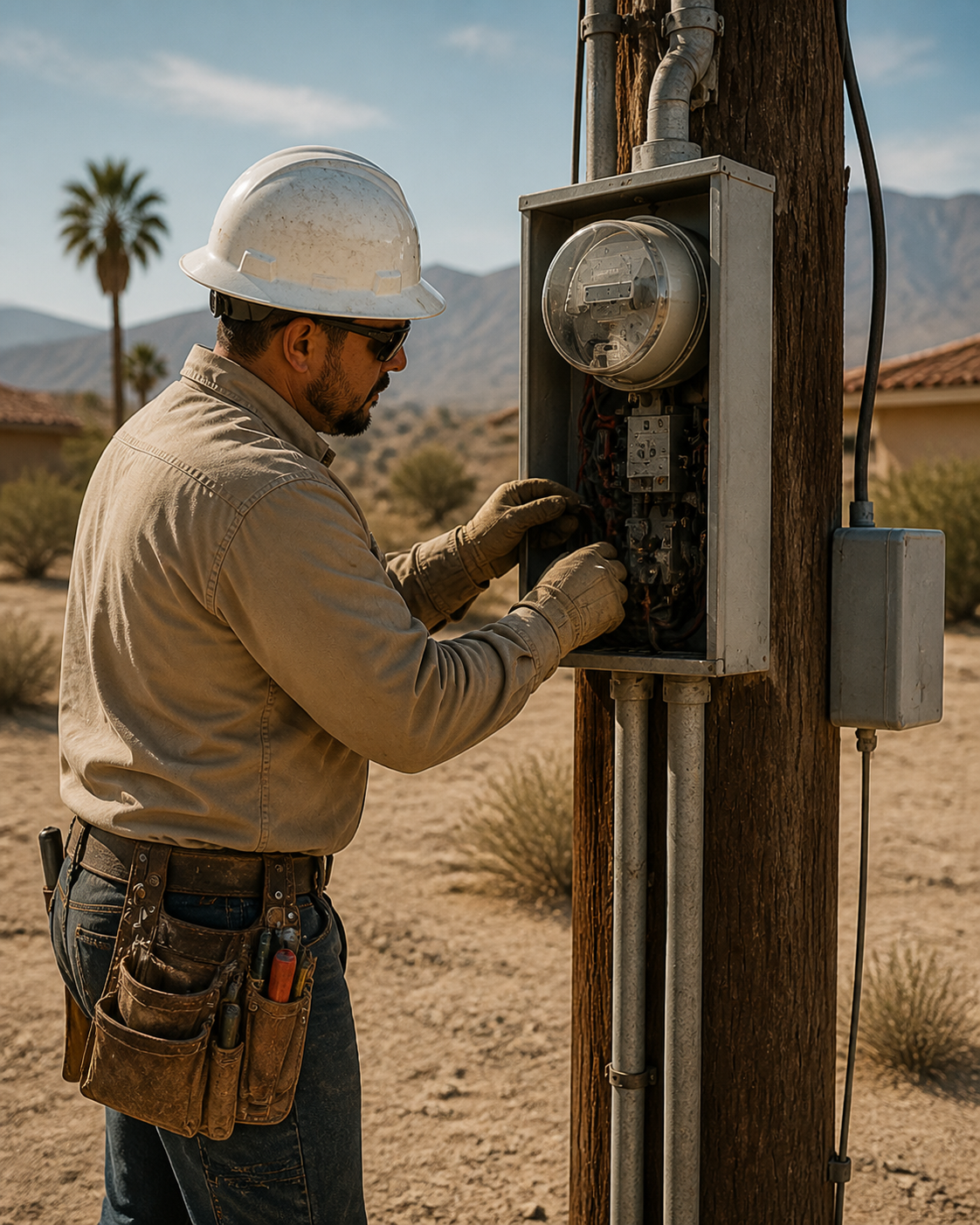
By seven in the morning, the metal enclosure is already warm enough to leave a print on the back of a hand. The real heat is still hours away.
Summer service work in the low desert has always required a different rhythm: early starts, staged water, short stretches in direct sun. But longer heat waves and heavier electrical loads have compressed the margin for error. Equipment gets less time to cool. Crews get less time to recover.
“Out here, heat isn’t the background. It’s another load on the system.”
The load after noon.
At a small commercial property in Cathedral City, the crew starts with the unglamorous work: torque checks, thermal readings, labels, and a careful look for discoloration. The infrared camera confirms what experience already suggests. Every weak connection becomes more consequential when ambient temperature stays high.
The last call comes just before the crew plans to pack up. A cooling system has tripped at a nearby community facility. Nobody debates whether to take it. In August, some jobs are not really optional.